0V-HBZ7000 Firebird Freedom RTF Electric <font size="2" face="Arial, Helvetica, sans-serif"><strong><font color="#CCCCCC" size="2">Key
Features</font></strong></font><font size="2" face="Arial, Helvetica, sans-serif">
</font><font face="Arial, Helvetica, sans-serif"><br>
<font color="#00FF66" size="2">• Zone 1 plane so no flying experience is necessary<br>
</font><font color="#00FF66" face="Arial, Helvetica, sans-serif"><font size="2">• </font></font><font color="#00FF66" size="2">Revolutionary Anti-Crash Technology, exclusive to HobbyZone, which actively
monitors the plane’s orientation, as it relates to the ground and sky,
and cuts the motor, in tandem with giving neutral steering and up elevator,
if the plane enters a steep dive. This causes the plane to come out of the dive
so the user can regain control. Once pilots gain experience flying, they can
increase maneuverability and overall control by turning ACT off via the switch
on the transmitter<br>
</font><font color="#00FF66" face="Arial, Helvetica, sans-serif"><font size="2">• </font></font><font color="#00FF66" size="2">3-channel radio system allows for pitch control so you can make tighter turns
and have a wider range of maneuvers. ACT makes it easier for you to teach yourself
how to fly with a 3-channel airplane<br>
</font><font color="#00FF66" face="Arial, Helvetica, sans-serif"><font size="2">• </font></font><font color="#00FF66" size="2">One-box purchase so everything you need to get flying comes in the box<br>
</font><font color="#00FF66" face="Arial, Helvetica, sans-serif"><font size="2">• </font></font><font color="#00FF66" size="2">Ready-to-fly design allows you to get in the air quickly after simply attaching
the wing pieces and landing gear, and installing the rechargeable 7-cell 8.4V
900mAh Ni-MH battery pack<br>
</font><font color="#00FF66" face="Arial, Helvetica, sans-serif"><font size="2">• </font></font><font color="#00FF66" size="2">Powerful 480 motor for great climb rate and power<br>
</font><font color="#00FF66" face="Arial, Helvetica, sans-serif"><font size="2">• </font></font><font color="#00FF66" size="2">Two-piece, plug-in wing that provides better handling in the wind, smoother
flight, easier transportation, and a sleek, swept-wing design<br>
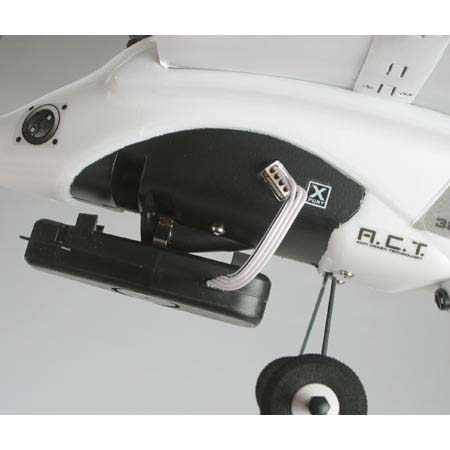
</font><font color="#00FF66" face="Arial, Helvetica, sans-serif"><font size="2">• </font></font><font color="#00FF66" size="2">X-Port™ technology so you can use exciting plug-in accessories<br>
</font><font color="#00FF66" face="Arial, Helvetica, sans-serif"><font size="2">• </font></font><font color="#00FF66" size="2">Durable, steel wire pushrods for more precise and consistent control<br>
</font><font color="#00FF66" face="Arial, Helvetica, sans-serif"><font size="2">• </font></font><font color="#00FF66" size="2">Detailed instruction manual and video CD to get your Firebird Freedom in the
air and flying safely<br>
1.2 amp variable rate DC peak charger, with LED indicator and trickle charge<br>
</font><font color="#00FF66" face="Arial, Helvetica, sans-serif"><font size="2">• </font></font><font color="#00FF66" size="2">Soft, resilient rubber nose cushions the force of impact and decreases damage
in case of hard a landing<br>
</font><font color="#00FF66" face="Arial, Helvetica, sans-serif"><font size="2">• </font></font><font color="#00FF66" size="2">Responsive controls while also providing better protection than previous systems</font>
<font color="#00FF66">
</p>
</font></font>
<p><font face="Arial, Helvetica, sans-serif"><strong><font color="#CCCCCC" size="2">Overview</font></strong>
<br>
<font color="#00FF66" size="2">Three Channels, Zone 1, Anti-Crash Technology – New Pilots Get It All with the HobbyZone Firebird Freedom </font></font></p>
<p><font color="#00FF66" size="2" face="Arial, Helvetica, sans-serif">The HobbyZone Firebird Freedom, now the second plane with revolutionary
Anti-Crash Technology™ (ACT), makes it easier for new pilots to teach
themselves how to fly with a 3-channel system, and then progress on to other
larger and faster RC planes in the HobbyZone and ParkZone product lines. Additionally,
X-Port technology makes the options for fun endless! </font></p>
<p><font color="#00FF66" size="2" face="Arial, Helvetica, sans-serif">With this plane come many exciting firsts for HobbyZone, which
raise the bar for teach-yourself-to-fly, ready-to-fly RC planes: <br>
· A 3-channel radio system in a Zone 1 airplane; <br>
· Anti-Crash Technology in a 3-channel airplane; <br>
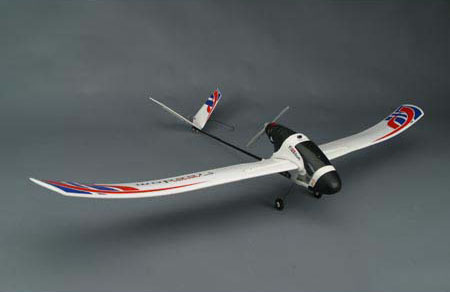
· A 2-piece, mid-set, swept, plug-in wing; and <br>
· Rigid, steel wire pushrods to more precisely manipulate the control
surfaces. </font></p>
<p><font color="#00FF66" size="2" face="Arial, Helvetica, sans-serif">As with all HobbyZone planes, the Firebird Freedom
comes with all the benefits you have come to expect and everything that’s
needed to get in the air, including: <br>
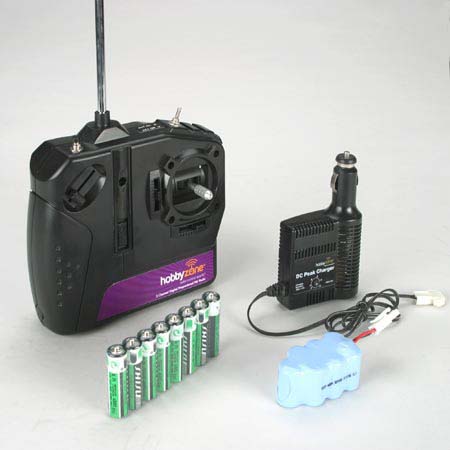
· A fully proportional 3-channel FM radio system; <br>
· Batteries for the transmitter; <br>
· A rechargeable Ni-MH battery pack; and <br>
· A variable rate DC peak charger. </font></p>
<p><strong><font color="#CCCCCC" size="2" face="Arial, Helvetica, sans-serif">FAQs:</font></strong><br>
<font color="#00FF66" size="2" face="Arial, Helvetica, sans-serif">Question:
What is the benefit of having pitch for a new pilot as it relates to this plane?
<br>
Answer: Thanks to incorporating pitch into the control mix, ACT can actually
recover more quickly than it can with a 2-channel transmitter. This allows new
pilots to have more control, but still benefit from the safety of having ACT
working to keep them from going into a spiral dive that could lead to a crash.
ACT works in tandem with the 3rd channel (pitch) by reducing throttle and applying
up elevator to correct a spiral dive that might lead to a crash. The pitch control
also allows the pilot to trim the Firebird Freedom in pitch easily in flight
from the transmitter!</font></p>
<p><font color="#00FF66" size="2" face="Arial, Helvetica, sans-serif">Question: How does the wing
design for the Firebird Freedom differ from other HobbyZone planes? <br>
Answer: Unlike any other plane in the HobbyZone line, the wing for the Firebird
Freedom comes in two pieces that plug-in to the sides of the fuselage. This
2-piece design allows the airplane to fit into a shorter, stronger box, which
minimizes damage in transit and the amount of space the product will take up
on the shelf. The wing pieces also separate easily from the fuselage, which
allows for easy transport of the plane is put together initially. This design
also allows for the angle between the fuselage and the wing to be more severe,
resulting in a sleek, swept look. Additionally, the wing pieces have a mid-fuselage
location for their entry point. This makes the plane respond better to wind
and fly more smoothly because the weight of the wing is in the middle of the
fuselage instead of sitting on top of the fuselage. </font></p>
<p><font color="#00FF66" size="2" face="Arial, Helvetica, sans-serif">Question: How does the function
of pushrods differ from nylon line? <br>
Answer: Pushrods are more durable and allow for more precise manipulation of
the control surfaces. </font></p>
<p><font color="#00FF66" size="2" face="Arial, Helvetica, sans-serif">Question: How far away can
the Firebird Freedom fly from where a pilot is standing without losing control?
<br>
Answer: The Firebird Freedom has a radio frequency range of 2500 feet. That’s
equivalent to almost half a mile, so he or she will likely lose site of the
plane before control of it would be lost. </font></p>
<p><font color="#00FF66" size="2" face="Arial, Helvetica, sans-serif">Question: How does Smart-Trak
differ from Anti-Crash Technology? <br>
Answer: Smart-Trak uses time-based calculations to precisely adjust control
surface travel so pilots can enjoy responsiveness without over-control. When
the pilot flies a plane with Smart-Trak on at high throttle, Smart-Trak reduces
control surface travel if it calculates that the pilot is in danger of over-controlling
the plane, which could cause it to enter a spiral dive. When the throttle is
reduced, Smart-Trak increases control surface travel so pilots can enjoy superb
responsiveness at slower speeds too. To recap on the detailed description of
Anti-Crash Technology that is explained above, the optical sensors can “see”
what is going on as it’s happening. Therefore, ACT is a better product
because it is acting in real-time to what the plane’s actual positioning
is, and Smart-Trak technology is less capable because it is reacting the pilot’s
input via the transmitter and and 'estimate' of what the plane is actually doing.
Both work toward avoiding a dive that could lead to a crash, but ACT is more
active in achieving the goal of crash-avoidance. </font></p>
<p><font color="#00FF66" size="2" face="Arial, Helvetica, sans-serif">Question: How do the larger
control surfaces make that feature a good thing for new pilots? <br>
Answer: Because the control surface is larger and has more travel, it allows
pilots to get more response from their Firebird Freedom than they can with other
HobbyZone Zone 1 planes. This means that pilots can make tighter turns than
was previously possible with other Zone 1 planes. This is made practical, because
ACT actually 'knows' the attitude of the plane and can react quickly if the
pilot gets in trouble by over controlling. </font></p>
<p><font color="#00FF66" size="2" face="Arial, Helvetica, sans-serif">Question: How does the updated
physical design of the Firebird Freedom, as compared to other HobbyZone Zone
1 planes, make it an improvement for pilots who are new to RC flight? <br>
Answer: The Firebird Freedom has a lot of great physical features that make
it a great plane for new pilots. It has a resilient rubber nose, unlike the
hard plastic nose of the Firebird Commander and Firebird IIST. The material
that the nose is made of is important in reducing the force of impact of the
plane should a crash occur, which will ideally minimize any potential damage
to the plane. Additionally, the Firebird Freedom has larger control surfaces,
which increase responsiveness, and it has black stripes on the bottom of the
wing that help pilots keep orientation of the plane when it is in the sky. The
decals on the top of the wing are on the very edge, while the decals on the
underside of the wing are close to the fuselage. The plane also has a 2-piece
mid-set wing that is a first for HobbyZone. </font></p>
<p><font color="#00FF66" size="2" face="Arial, Helvetica, sans-serif">Question: How does the 2-piece
wing help new pilots learn to fly? <br>
Answer: The fact that the Firebird Freedom has a mid-wing design makes the plane
respond better to wind and fly more smoothly. The 2-piece, mid-set, plug-in
wing design allows for: <br>
· The airplane to fit into a shorter, stronger box, which minimizes damage
during shipping, and it can come apart easily for transport after it has initially
been put together. <br>
· The wing to have a mid-fuselage location, which makes the plane respond
better to wind and fly more smoothly <br>
· The wing design to have a modern, swept-wing line <br>
· A stronger wing because of the carbon fiber rod supporting the wing
at the point of attachment <br>
· The wing to be relatively clear of the prop because it sits further
away from the prop </font></p>
<p><font color="#00FF66" size="2" face="Arial, Helvetica, sans-serif">Question: Where can the
Firebird Freedom to be flown? <br>
Answer: Like all HobbyZone planes, the Firebird Freedom should be flown in a
large, open area that is free of trees, telephone poles, light poles, power
lines, buildings, cars, and people, such as a large park or soccer fields. Additionally,
it should be flown upwind, with the sun behind the pilot or at high-sky. This
plane can be flown at an AMA-sanctioned RC flying field, but it doesn’t
have to be because of its size and speed. Just be sure to keep it away from
people and objects. </font></p><p>
| Wing
Span |
50.0
in (1270mm) |
| Overall
Length |
33.0
in (840mm) |
| Flying
Weight |
23.0
oz (650 g) |
| Motor
Size |
480
Power |
| Radio |
3-channel
proportional |
| Trim
Scheme Colors |
White
with blue, red, and black decals |
| Speed
Control |
Digital
proportional ESC/receiver unit |
| Recommended
Battery |
7-cell
8.4V 1000mAh Ni-MH comes with the plane |
| Elevator |
Proportional |
| Rudder |
Proportional |
| Throttle |
Proportional |
| Approx.
Flying Duration |
12
minutes to 15 minutes |
| Approx.
Assembly Time |
3 minutes
for the plane and 40 minutes or less to charge the battery |
| Transmitter
Range |
2500
ft (755 m) |
| Available
Frequencies |
6 frequencies
on 27MHz |
| X-Port |
Yes |
| Charger |
1.2A
variable rate DC peak detect - charges 4- to 7-cell packs |
| Landing
Gear |
Steel
wire with foam wheels |
Needed
to Complete
| Everything
needed to get flying comes in the box: plane, transmitter, batteries, and
charger. Attach the wing pieces to the fuselage, charge the battery, and
fly! |
 $139.99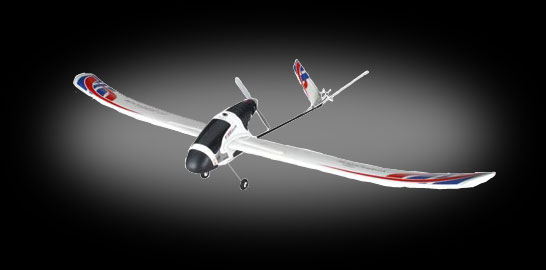


 Manual